dimarts, 9 de setembre del 2014

una MICA de TOT... i de RES

Hyvää tiistaita (tuesday_dimarts) kaikille!
Brazilian graffiti artists Os Gemeos (Octavio and Gustavo Pandolfo) were invited to the Vancouver Biennale to turn six multi-story silos on Granville Island into their trademark ‘Giants.’ _Els artistes grafiters brasilenys Os Gemeos van ser convidats a la Biennal de Vancouver per convertir sis sitges de diversos pisos (21 metres) a Granville Island en la seva marca registrada Giants.


Os Gemeos completely donated a month of their time to create the non-profit art project. _Os Gemeos han donat completament un mes del seu temps per crear aquest projecte d'art sense ànim de lucre.
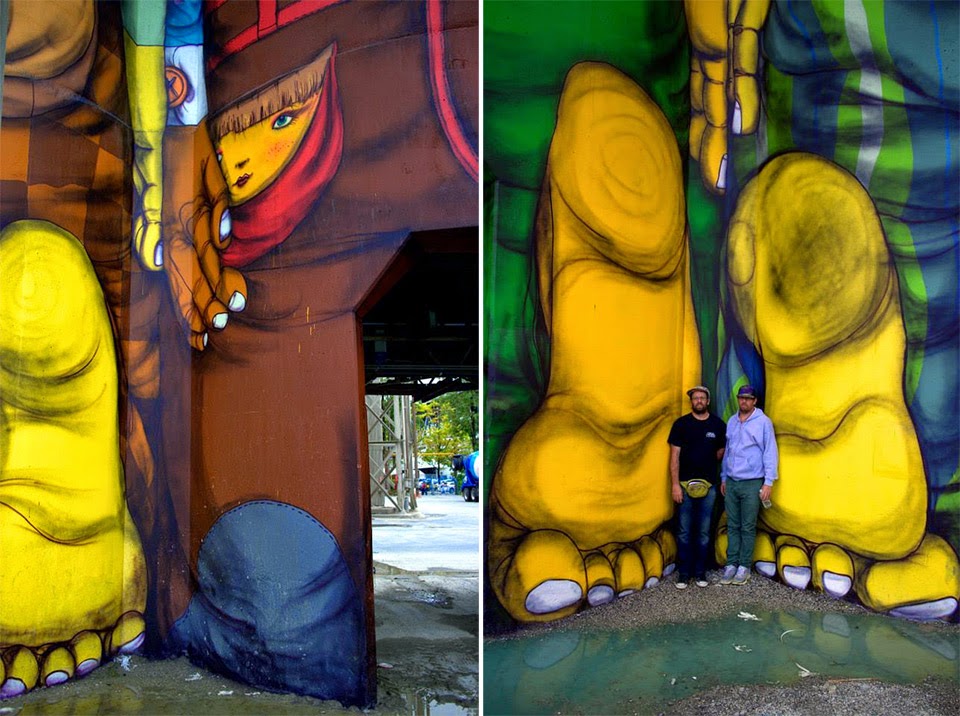

The first challenge of this project was to find a location that would fit with our idea. We did not want a conventional two-dimensional wall that we had done before – we wanted something different, special and unique. We have an ongoing project called “Giants” that has been realized in several places in the world such as Greece, USA, Poland, Portugal, the Netherlands, Brazil and England, and we will continue now in Canada, but with a difference. As the proposed Biennale has a strong connection with sculpture, we decided to find a place where the painting can be transformed, creating a dialogue between the two-dimensional and three-dimensional worlds. Another aim of this project is to bring new characters to Vancouver while sharing perspectives and cultures and establishing a relationship between the people who frequent this site and integrate this work into the city scenery. The connection between water and land on Granville Island, on the False Creek margins, also had a lot to do with the choice of location – for us, the water acts as a vein, symbolizing life, and it is very present in our work.- Os Gemeos.


all images src roaming-the-planet   via colossal

Nauttikaa! Enjoy_Gaudiu!
MOI, MOI!

dilluns, 8 de setembre del 2014

barcelona-hèlsinki-barcelona

Hyvää maanantaita (monday_dilluns) kaikille!
The Finnish architect Alvar Aalto (1898-1976) is one of the hits of the new season of CaixaForum Barcelona museum. The architecture exhibition of this museum located in   Montjuic (Barcelona) will be devoted this time to this Finnish master, a key figure in international architecture and design from the twenties of the last century. The public will see a dozen of models, original drawings, furniture and various objects, some of which will dialogue with pieces by artists like Alexander Calder and Jean Arp. The exhibition will be open between May and August 2015 in a joint project with the Vitra Design Museum and the Museum Alvar Aalto in Helsinki. _L'arquitecte finlandès Alvar Aalto (1898-1976) serà un dels protagonistes de la nova temporada del Caixaforum de Barcelona. La mostra d'arquitectura del museu de Montjuïc estarà dedicada en aquesta ocasió a aquest mestre finès, una figura clau de l'arquitectura i el disseny internacional d'avantguarda des dels anys vint del segle passat. El públic podrà veure una vintena de maquetes, dibuixos originals, mobles i diferents objectes, alguns dels quals dialogaran amb peces d'artistes com Alexander Calder o Jean Arp. La mostra es podrà veure entre els mesos de maig i agost de l'any vinent en un projecte conjunt amb el Vitra Design Museum i l'Alvar Aalto Museum de Hèlsinki.


Eventually, we'll discuss more extensively about this great Finnish architect and designer! _Arribat el moment, ja parlarem més extensament d'aquest gran arquitecte i dissenyador finlandès!

Nauttikaa! Enjoy_gaudiu!
MOI, MOI!

divendres, 5 de setembre del 2014

AHIR vaig anar a...

Bologna _Part 4 _4a part
It was very hot there in Bologna. Fortunately there are a lot of porticoes to get protected from the sun! And fortunately there are ice creams! Such this of pear williams... from Cremeria Santo Stefano. Mmmm... delicious and refreshing! Italian ice creams deserve their good reputation! _Els primers dies que vam ser a Bolonya, la calor va ser força intensa. Sort dels porxos... i dels gelats artesanals! Com aquest de pera Williams... de la Cremeria Santo Stefano. Mmmm... deliciós i refrescant! Ja és ben merescuda la fama dels gelats italians!


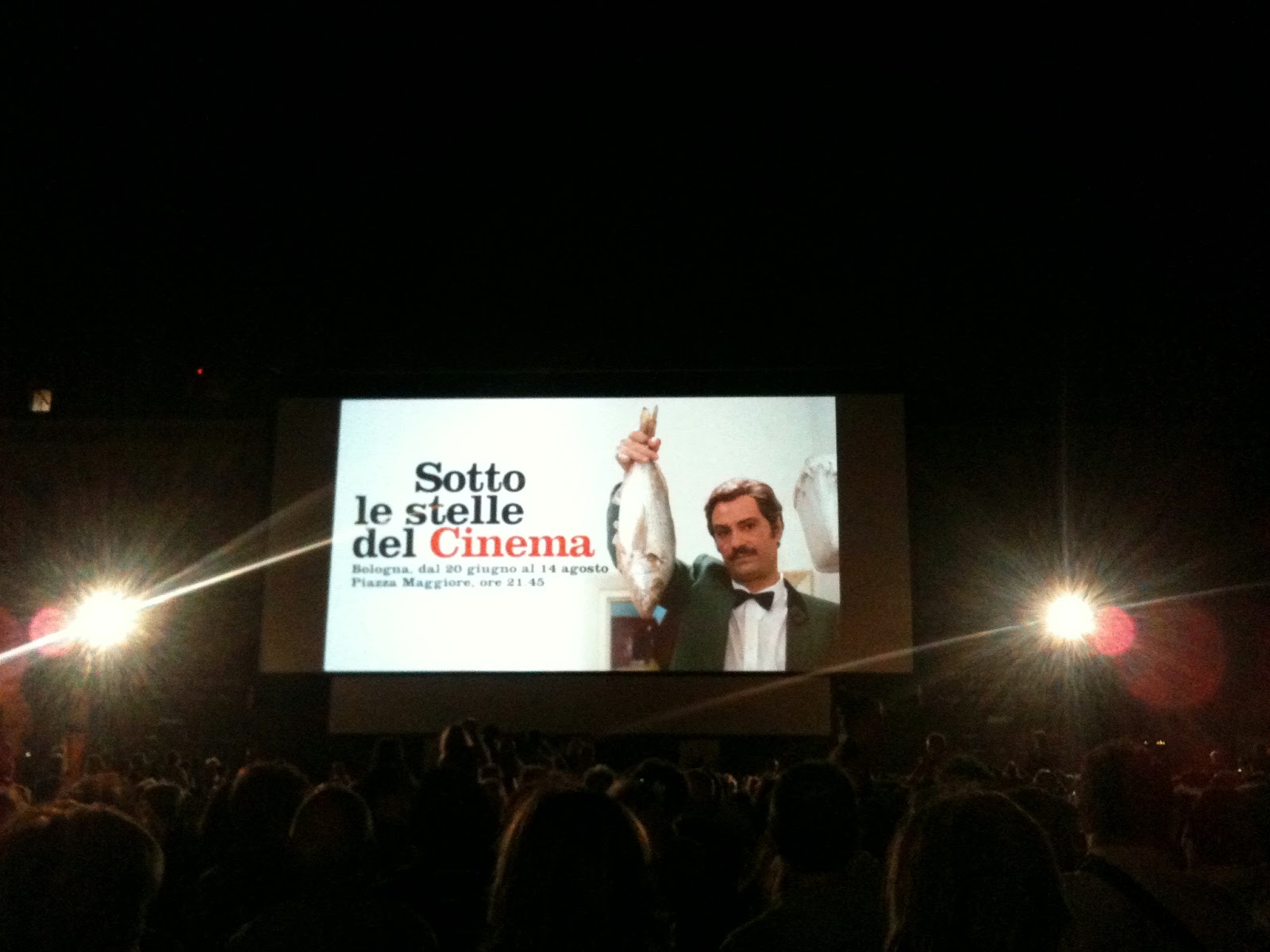
But just after a moment from the sunset, everything changed. Weather didn't refresh too much, but the power of the sun decreased, and some air blew in the evening and all overnight. It was time to dream upon the stars... the stars of the film festival organized by the Cineteca of Bologna every summer, completely free, in Piazza Maggiore, from 20 June to 14 August. _Però quan el sol es ponia, la cosa ja canviava una mica. No refrescava massa, però la potència diurna del sol desapareixia, i un aire, amb força ganes, s'aixecava als vespres i durant la nit. Era l'hora de somniar amb les estrelles... amb les estrelles del cinema gràcies al festival que Bologna i la seva Cineteca organitzen cada estiu, de manera gratuita, a la Piazza Maggiore, del 20 de juny al 14 d'agost. 


'Sotto le stelle del cinema', one of the largest screens in Europe (outdoor festivals), that projects great classic restored films. _Sotto le stelle del cinema, en una de les pantalles més grans d'Europa (en festivals a l'aire lliure), projecta grans pel·lícules clàssiques restaurades.


We enjoyed 'L'ultimo metrò', by François Truffaut... _Nosaltres ens hi vam quedar a veure les últimes quatre pel·lícules... L'ultimo metrò, de François Truffaut...


...and also 'La Signora de la porta accanto', also by François Truffaut, and Pane, Amore e... with two very young Vittorio de Sica and Sophia Loren, by Dino Risi... _...i La Signora de la porta accanto, també de François Truffaut, i Pane, Amore e... amb uns molt joves Vittorio de Sica i Sophia Loren, de Dino Risi... 


...and 'Il Sorpasso', by Dino Risi, an homage to the italian Ferragosto. _...i Il Sorpasso, també de Dino Risi, que és un tot un homenatge a Ferragosto.


And finally, in case someone missed something from the city... Palazzo Accursio, a local products shop, 'Compianto su Cristo morto', Giardini Margherita, Library dell'Archiginnasio, Fontana del Nettuno and Palazzo Re Enzo, Madonna, a column from Basilica di San Petronio and Via Pescherie Vecchie (Quadrilatero). _I, per acabar, per si algú trobava a faltar alguna imatge més de la ciutat... Palazzo d'Accursio, una botiga de productes locals, Compianto su Cristo morto, Giardini Margherita, la Biblioteca dell'Archiginnasio, la Fontana del Nettuno i el Palazzo Re Enzo, una Madonna, columna de la Basílica di San Petronio i la Via Pescherie Vecchie (Quadrilatero).


Next week we'll show you how it was our little trip to Florence from Bologna. _La propera setmana us ensenyarem el que va donar de si l'excursió a Florència des de Bolonya.

Nauttikaa! Enjoy_Gaudiu!
MOI, MOI! Ja ihanaa viikonloppua!
dijous, 4 de setembre del 2014

AHIR vaig anar a...

Bologna_ Part 3_3a part.
Bologna is a flat city, which allows you to walk and walk and walk and explore amazing places all around. It is also a city where, at least when there is nice and warming weather, you can use the bike. It is therefore interesting to follow some of the recommended routes, such... _Bolonya és una ciutat plana, i això permet caminar i caminar i passejar i descobrir per tot arreu racons sorprenents. També és una ciutat que, com a mínim quan fa bon temps, es pot recòrrer molt bé en bicicleta. Per això és interessant seguir algunes de les rutes recomanades, per exemple... 


The one of the towers and the 'torresottos', culminating up in the tower of Asinelli (1109-1119) of 97,20m height with a drop of 2.23 metres, with a spectacular view overlooking the whole city and beyond! _La de les torres i torresottos que culmina amb la pujada a la torre dels Asinelli (1109-1119), de 97,20m d'alçada i 2,23m d'inclinació, amb una vista espectacular  que domina tota la ciutat... i més enllà !


...gates (10 of the initial 12) and some sections of the third circle of city walls from the 13th century... _...i portes (10 de les 12 inicials) i muralles de la ciutat, com les del tercer anyell del segle 13...


At first glance it seems strange that Bologna couldn't have a river... but it is not that way. On the outskirts of the city passes the Reno river, which enters the city through the 'Canal di Reno', handing out water to the different channels that crossed the ancient city and its mills, at that time when Bologna was an important spot of the textile industry in Europe. The city, then, was like a small Venice... but today only a very small sections remain uncovered and  hidden between buildings... _A primera vista sembla estrany que per Bolonya no hi passi cap riu... però no és així. A les afores de la ciutat hi passa el riu Reno, que entra a la ciutat a través del Canal di Reno, que repartia aigua als diferents canals que creuaven la ciutat antiga i que movia els seus molins, quan havia estat un important centre de la indústria tèxtil a Europa. La ciutat, doncs, era com una petita Venècia... però avui dia només uns molt petits trams queden al descobert... amagats entre edificis...


...or  just visible through a window (finestrella), that you should discover for yourself, as it is one of the hidden secrets of the city. _...o només visibles a través d'una finestreta (finestrella), que haureu de descubrir vosaltres mateixos, ja que és un dels secrets que amaga la ciutat.


This is one of the proposed routes... The path that follows the waterways in Bologna. You may even  discover its old harbor, in a well restored area of the city... Manifattura delle Arti (a recovered zone for culture purposes, with MAMbo museum and the fimoteca, for example) that connects with the important communication channel 'Canale Navile' in the plain of Bologna. _Aquesta és una de les altres rutes que proposa la ciutat... resseguir els camins de l'aigua a Bolonya, que passen, fins i tot, per un antic port, on ara hi ha la recuperada zona de la Manifattura delle Arti (una zona recuperada per a la cultura, amb el MAMbo i la filmoteca, per exemple) que conectava amb la important via de comunicació fluvial que era el Canale Navile a la plana de Bolonya.


There will be much more tomorrow! _Demà, molt més!

Nauttikaa! Enjoy_Gaudiu!
MOI, MOI!

dimecres, 3 de setembre del 2014

AHIR vaig anar a...

Bologna_ Part 2 _2a part.
The cityscape of Bologna is further enriched by its elegant and extensive porticoes, for which the city is famous. In total, there are some 38 kilometres (24 miles) of porticoes in the city's historical centre (over 45 km (28 mi) in the city proper), which make it possible to walk for long distances sheltered from the elements. _Una de les característiques més destacables i impressionants de la ciutat de Bolonya són els 38km de porxos adossats a les cases del centre (45km en total a la ciutat), molt agradables per passejar durant, en el nostre cas, les hores tan caluroses de l'estiu (vam arribar als 42 graus al migdia), i també a l'hivern i els dies de pluja.


The Portico di San Luca is possibly the world's longest. It connects Porta Saragozza (one of the twelve gates of the ancient walls built in the Middle Ages) with the Sanctuary of the Madonna di San Luca (1723) prominently located on a hill overlooking the town. The winding 666 vault arcade, almost four kilometres (3,796 m) long, effectively links San Luca to the centre of town. Unfortunately, at the top, you'll only find a little fountain with a small trickle of water not refreshing at all! _Els Porxos de San Luca són, possiblement, els més llargs del man, i connecten la Porta Saragozza (una de les dotze portes de les antigues muralles construïdes al segue 13) amb el Santuari de la Madonna di San Luca (1723) situat en un turó que domino tota la ciutat. 666 arcades de volta el conformen en el seu trajecte ascendent (i ferragós en plena tarda calorosa d'estiu) de gairebé quatre quilòmetres (3,796km) de llarg. Malauradament, al capdamunt, només hi trobareu una petita font amb un petit rajolí d'aigua gens refrescant!


These porticoes protect amazing Renaissance and Baroque palaces, full of art, wonderful architecture, courtyards and secret gardens, and fresh interior peristyles. _Aquests porxos amaguen, al llarg del seus recorreguts, fantàstics palaus gòtics, renaixentistes i barrocs, plens d'art, maravellosa arquitectura, jardins secrets i frescos patis i peristils interiors. 


Also big churches full of fine paintings, frescoes, sculptures and holiness! _També esglésies enormes al seu interior, recarregades de pintures, frescos, escultures i molta santedat!


There will be much more tomorrow! _Demà, molt més!

Nauttikaa! Enjoy_Gaudiu!
MOI, MOI!

dimarts, 2 de setembre del 2014

AHIR vaig anar a...

AHIR vaig anar a... Bolonya, quatre dies, i un dia més a Florència (1a part).
Yestarday I went to visit... Bologna, for four days, and another one in Florence (1st part).
Actually it wasn't yesterday... It happened in mid august... during that famous italian week called 'ferragosto', when everything is closed, or nearly closed, for holidays. We decided to let Finland 'have a break from us'... just for the summer! _Bé... no va ser ben bé ahir. Va ser a mitjans d'agost... concretament la setmana italiana tan famosa de ferragosto, quan, com molt bé diu el seu nom, tot, o gairebé tot, és tancat per ferie (per vacancies). Vam decidir que Finlàndia descansés una mica de nosaltres, ja que ja ens havíem vista al més de juny. Però només per a aquest estiu!


Bologna is the largest city (and the capital) of the Emilia-Romagna Region in Italy. Home to the oldest university in the world, University of Bologna, founded in 1088, Bologna hosts thousands of students who enrich the social and cultural life of the city (Bologna la dotta). Famous for its towers and lengthy porticoes, Bologna has a well-preserved historical centre (one of the largest in Italy). _Bolonya és la capital de l'oblidada, turísticament parlant, regió d'Emília-Romanya (al nord d'Itàlia), prop dels Apenins. I, pel que semblava, Bolonya també és turísticament parlant un indret força oblidat. De fet, l´única referència que en teníem era per la fama dels seus Erasmus, per la seva vida universitària i la qualitat dels ensenyaments (Bologna la dotta)... la seva universitat és la més antiga del món (1088). A banda d'això, és una de les ciutats històriques més conservades i més espectaculars pel que fa a la profusió i la riquesa de la seva arquitectura medieval al centre.


Over the centuries, Bologna has acquired many nicknames: "The red one" (la rossa) originally refers to the colour of the roofs in the historic centre, but this nickname is also connected to the political situation in the city, started after World War II: until the election of a centre-right mayor in 1999, the city was renowned as a bastion of socialism and communism in particular the Italian Communist Party. _És la ciutat roja (Bologna la rossa) pel color de les seves teulades, però també per haver estar seu del Partit Comunista Italià i de les resistència contra els feixistes durant la 2aGM.

2,33km further from the Two Towers, walking through the arcades of the great (and long) Strada Maggiore, we had been recommended a small kiosk called Gelateria Oscar
_2,33km més enllà, des de les Dues Torres, caminant pels porxos de la magnífica (i llarga) Strada Maggiore, ens havien recomanat un petit quiosc de gelats... la Gelateria Oscar


"The fat one" (la grassa) refers to its cuisine. Who would dare to say that knows nothing about its famous Bolognese sauce (ragú alla bolognese; which can never be served with spaghetti because it slips), mortadella, parmigian cheese and, of course, the tortellini? _Però també és Bologna la grassa, per la seva excel·lent cuina. Qui no coneix els tortellini, la salsa bolognesa o ragú alla bolognese (que mai pot anar amb espagueti perquè rellisca... map restaurant el que ho serveix així), i la mortadel·la o el formatge parmesà típics de la zona? 


Bologna's historic centre is Europe's second largest containing an immense wealth of important medieval, renaissance, and baroque artistic monuments. One of the main attractions of the city are the spectacular leaning towers Asinelli (97,2m height; we're not going to tell you how many steps are inside to climb up on top of the roof ... you need to discover it by yourself) and Garisenda (48m height), both from the 12th century, with a tilt, the first of 2,2m and 3,2m the second. When viewed together, the inclination is remarkable! _Una de les principals atraccions de la ciutat són les espectaculares torres inclinades dels Asinelli i Garisenda, del segle 12, de 97,2m d'alçada (no us direm quan esglaons vam comptar per pujar fins al capdamunt de tot... ho haureu de descobrir vosaltres mateixos), i 48m respectivament, amb una inclinació, la primera, de 2,2m i 3,2m la segona. Quan es veuen juntes, la inclinació és destacable! 


The highest one is visible from any place of the city! _La més alta és visible des de qualsevol punt de la ciutat!


It is said that, in total, they would have been built up between 80 and 100 towers, although they may not have coincided in time. _Sembla ser que, en total, se n'haurien construit entre 80 i 100, tot i que potser no hagin coincit en el temps. 


It's also said that its role was merely able, and building them allowed families demonstrate their richness. Currently there are less than 20, and only the tower Asinelli can be visited. The others felt down over time, or were simply demolished. _Hi ha qui diu que la seva funció era merament de poder, i permetia a les famílies que les construien demostrar la seva riquesa. Actualment en queden menys de 20, i només la torre dels Asinelli és visitable. Les altres van anar caient amb el temps, o simplement van ser derruides.


There will be much more tomorrow! _Demà, molt més!

Nauttikaa! Enjoy_Gaudiu!
MOI, MOI!

dilluns, 1 de setembre del 2014

...sense títol

Hyvää maanantaita (monday_dilluns) kaikille!
After a well deserved holiday, our blog reopens its doors and gives you all, again, a warm welcome! But talking about... welcoming... does anyone knows which is the object from the New World that represents hospitality? _Després d'unes merescudes vacances (per què no) el blog reobre les seves portes i us dona, novament, la benvinguda a tots. Però... parlant de benvingudes... sabeu quin és l'objecte que, tradicionalment, des de la descoberta del Nou Continent, representa l'hospitalitat?


That's it... the pineapple. But... why? _Efectivament... la pinya. Però... per què?


The plant is indigenous to South America and is said to originate from the area between southern Brazil and Paraguay. The natives of southern Brazil and Paraguay spread the pineapple throughout South America, and it eventually reached the Caribbean, Central America and Mexico. Columbus encountered the pineapple in 1493 on the leeward island of Guadeloupe. He called it piña de Indes, meaning "pine of the Indians," and brought it back with him to Europe. _La pinya és originària de sud-Amèrica. Més concretament de la regió situada entre Brasil i Paraguay. Els natius d'aquestes terres aviat la van extendre cap al Carib, centre-Amèrica i Mèxic. No va ser fins l'any 1493 que va ser descoberta pels europeus... Cristòfol Colom, en el seu segon viatge, la va trobar a l'illa de Guadalupe, i la va anomenar pinya d'índies, ja que recordava a les pinyes dels pins.

King Charles II of England posing for his royal portrait while being gifted a pineapple by the Royal Gardener, John Rose, 1675 
_El Rei Carles II d'Anglaterra davant del sue jardiner que li ofereix una pinta, John Rose, 1675   

In the Caribbean, Europe and North America, the pineapple became associated with the return of ships from extended voyages, and an emblem of welcome and hospitality. To the Carib, the pineapple symbolized hospitality, and the Spaniards soon learned they were welcome if a pineapple was placed by the entrance to a village. This symbolism spread to Europe, then to Colonial North America, where it became the custom to carve the shape of a pineapple into the columns at the entrance of a plantation. According to the legend, the captain would spear a pineapple on a fence post outside his home to let his friends know of his safe return from sea. The pineapple was an invitation for them to visit, share his food and drink, and listen to tales of his voyage. _Al Carib, a Europa i a nord-Amèrica, la pinya s'associava amb el retorn dels vaixells que realitzaven grans travesses marítimes, i va esdevenir ràpidamnt un emblema de benvinguda i hospitalitat. Del Carib, la simbologia va arribar a Europa i a l'Amèrica Colonial de la mà dels espanyols, on pinyes esculturals reposaven damunt de columnes a l'entrada de les plantacions.  Segons la llegenda, els capitans colocaven pinyes a la tanca de les seves cases per fer notar als seus amiss que havien tornat sans i estalvis, i els conovidava a passar i a menjar les delícies del Nou Món mentre escoltaven les seves històries.


John Murray, 4th Earl of Dunmore, in 1761, in Scotland, took this symbology to its highest level! _Hi ha qui va arribar a dur aquesta simbologia al més alt extrem! Va ser John Murray, quart comte de Dunmore, l'any 1761, a Escòcia.


Nauttikaa! Enjoy_Gaudiu!
MOI, MOI! Ja tervetuloa kaikille!