Hyvää torstaita (thursday_dijous) kaikille! Juhannus takes place during the shortest night of the year, during the summer solstice (juhannusaato), today, because, mainly in the further north areas, the sun remains visible at midnight. It is truly the midnight sun!_A Finlàndia també se celebra de manera prou important la festivitat de Sant Joan. En diuenJuhannus, i té lloc durant la nit més curta de l'any, durant el solstici d'estiu (juhannusaato), avui, perquè, sobretot a les regions de més al nord... és quan el sol no arriba a pondre's mai. És, veritablement,el sol de mitjanit!
Everyone leaves to their summer cottages, 'mökki'. Although, increasingly, Juhannus is also held in major cities. Cooking or just relaxing and always drinking with friends or families. However, it is also traditional to bonfires at the sea and at lakes, 'kokko', which is then thrown into the water!_Tothom marxa cap a les seves cabanes d'estiu, les mökki. Tot i que, cada vegada més, també se celebra a les grans ciutats. Cuinar, relaxar-se i, sempre, beure, amb els amics o la família. De totes maneres, també és tradicional encendre fogueres a les vores del mar o dels llacs, kokko, que després es llancen a l'aigua!
In this video you may see a beautiful example of how we celebrate Midsummer Festival (Sant Joan) in Spain compared to those celebrations of the Nordic countries, like Juhannus in Finland!_Aquestes imatges del vídeo que ara veureu volen representar una mica com celebrem aquí, en alguns llocs de la península Ibèrica, la festa de Sant Joan... la festa del foc i de l'arribada de l'estiu, en comparació a les celebracions de Juhannus (midsommer) a Finlàndia i a la resta de països nòrdics!
Beware of fireworks, and bonfires! On the contrary, you'll see fingers flying everywhere! Don't forget neither la 'Coca de Sant Joan' nor 'orxata'!_Compte amb els petards, i les fogueres! Si no... ja sabem què passa. Volen els dits pertot arreu! Ah... i que no falti la Coca de Sant Joan ni la orxata!
Nauttikaa! Enjoy_Gaudiu!
Hyvää viikonloppua kaikille, ja ihanaa Juhannusta!
Have a nice weekend, and Happy Midsummer!_Bon cap de setmana a tots i bona revetlla!
Today is the469thanniversary of the cityof Helsinki.Today is'HelsinkiPäivää'! _Avui ésel 469 aniversari de la ciutat d'Hèlsinki. Avui, doncs, es va cel·lebrar amb molta festa Helsinki Päivää!
Helsinki was established as a trading town by King Gustav I of Sweden in 1550 as the town of Helsingfors, which he intended to be a rival to the Hanseatic city of Reval (today known as Tallinn), on the mouth of the Vantaa River on the site of the medieval village of Forsby (today, Vanhakaupunki neighbourhood). Little came of the plans as Helsinki remained a tiny town plagued by poverty, wars, and diseases. In the 1640s, Helsinki was moved to its current location on the Vironniemi peninsula because of better harbour conditions, to boost the city commerce. _Fundada
el 1550 com una rival de la ciutat hanseàtica de Reval (avui Tallinn)
pel rei Gustau I de Suècia, la ciutat d'Hèlsinki, va lluitar des dels
primers temps. El jove assentament va ser assolat per la pobresa, les
guerres i les malalties. A la dècada de1640, Hèlsinki es va traslladara la seva ubicacióactual ala penínsulaVironniemi, ja que lescondicionsportuàries eren millorsper impulsar elcomerç de laciutat.
1645
The plague of 1710 killed the greater part of the inhabitants of Helsinki. The construction of the naval fortress Sveaborg (In Finnish Viapori, today also Suomenlinna) in the 18th century helped improve Helsinki's status, but it was not until Russia defeated Sweden in the Finnish War and annexed Finland as the autonomous Grand Duchy of Finland in 1809 that the town began to develop into a substantial city. During the war, Russians besieged the Sveaborg fortress, and about one quarter of the town was destroyed in an 1808 fire. And you have already seen in our blog what kind o fo city it is today! _La pesta de 1710 va matar dos terços dels habitants d'Hèlsinki. Durant molt temps es va mantenir un petit poble costaner, eclipsada per la més floreixent del comerç en els centres de la regió bàltica. La construcció de Sveaborg (en finès Viapori, avui també Suomenlinna) fortalesa naval contribuir a millorar la seva situació, però no va ser fins que Rússia va derrotar Suècia en la guerra finlandesa i que s'adjunten a Finlàndia com el Gran Ducat autònom de Finlàndia, el 1809 Hèlsinki es va començar a desenvolupar en una gran ciutat. I ja heu vist al nostre blog quin tipus de ciutat és avui dia!
"Helsinki Day on 12 June is the day when the city bursts into flower, with joyful and diverse events taking place everywhere, on land and sea. The city's birthday has been celebrated each year since 1959.", VisitHelsinki._El 12 de juny, el Dia d'Hèlsinki, és el diaen què la ciutatesclataen flor,ambtot d'esdeveniments diversos quetenenlloca tot arreu, a terrai a mar.L' aniversaride la ciutat haestatcelebratcadaanydes de 1959, VisitHelsinki.
Vappu is a traditional festival held on 1 May in Finland – and it’s a day of celebration (from 1979)! It’s also the time when the people of Finland leave the long and harsh winter behind and enthusiastically welcome spring, longer hours of daylight, and their beloved green fields and forests. Traditionally, students always take part in this spring festival too by turning it into a very popular carnival ('kevään karnevaali', or spring carnival). _Vappu és la celebració de l'1 de maig a Finlàndia. L'any 1979 es va incorporar al calendari finlandès com a Dia del Treball. És, per tant, un dia de festa! Però les celebracions van més enllà, ja que, tradicionalment, també els estudiants han participat sempre d'aquesta festa de la primavera convertint-la en uncarnaval molt popular.
One of the main events, and one of the most crowded and important, takes place on 30 April, around 6 pm, round the statue of Havis Amanda (which symbolises the city of Helsinki emerging from the sea), situated at the entrance to the Esplanadi park and Kauppatori (market square), in the port, in front of the City Hall. A large crowd of students wearing overalls of different colours, representing those of their faculties, wash Havis Amanda and place a large cap on her head._Un dels actes principals, sinó el més importants i concorregut, té lloc avui dia 30 d'abril, la vigília, a les sis de la tarda, al voltant de l'estatua de Havis Amanda, situada entre l'inici del parc d'Esplanadi i Kauppatori (plaça del mercat) al port davant de l'Ajuntament de la ciutat on s'hi apleguen moltíssimes persones per rentar-la i posar-li una gorra d'estudiant al cap.
Why? Since 1890 students from Finnish universities and, by extension, also those who once were students, celebrate their graduation. These are those who really enjoy more the day throughout the city. And they celebrate it, among other things, carrying a cap on his head that stands out as a high school graduate._Per què? Des de 1890 els estudiants de les universitats finlandeses i, per extensió, també tots aquells que han estat estudiants, celebren la seva graduació. Aquests són els que realment viuen la festa d'una manera més intensa, que s'exten per tota la ciutat. I ho fan, entre d'altres coses, duent una gorra al cap que els destaca com a graduats a l'institut. Tradicionalment es duia tot l'estiu, però ara ja només el dia de Vappu i en algunes cerimònies acadèmiques.
The cap, ylioppislakki, is the same one that all the students wear when they graduate. They must keep it safe always, because they only get one. Some people even say that it must never be washed. Vappu is one of the times when people of all ages wear their graduation caps._Aquesta gorra, o ylioppilaslakki, només s'aconsegueix una vegada a la vida, i amb cada persona ha de ser per siempre. A més, es diu que no es pot rentar mai. S'ha de cuidar molt! I aquesta gorra també és la que porta l'estatuta de Havis Amanda, que un grup d'estudiants col·loca al seu cap amb l'ajuda d'una grua per a no malmetre-la. Aquí al sud, de ben segur que tothom hi pujaria al damunt i la pobra acabaria perdent algun braç o... D'altres escultures d'altres ciutats finlandeses també reben la seva gorra.
Vappu is, therefore, a national holiday, when people take to the streets all over the country, where there is music, demonstrations, different celebrations, etc. On 1 May in Helsinki, family and friends get together to have picnics and brunch all over the city, but especially in the Ullanlinnanmäki and Kaivopuisto parks, in the southern part of the city, next to the Baltic Sea. Others enjoy a very nice day at their family 'mökki' (cottage)!_Les celebracions de Vappu continuen l'endemà, 1 de maig. Tothom es reuneix a Kaivopuisto (els suecoparlants ho fan a Kaisaniemi), al sud de la ciutat, a tocar del mar, i a Ullalinnanmäki, per a fer-hi un picnic i veure vi espumós (cava, xampany, ...) i comprar globos. Mentrestant, rues i festivals se succeeixen també per tota la ciutat. D'altres, simplement, marxen cap a les mökki (cabanes) a passar un bon dia!
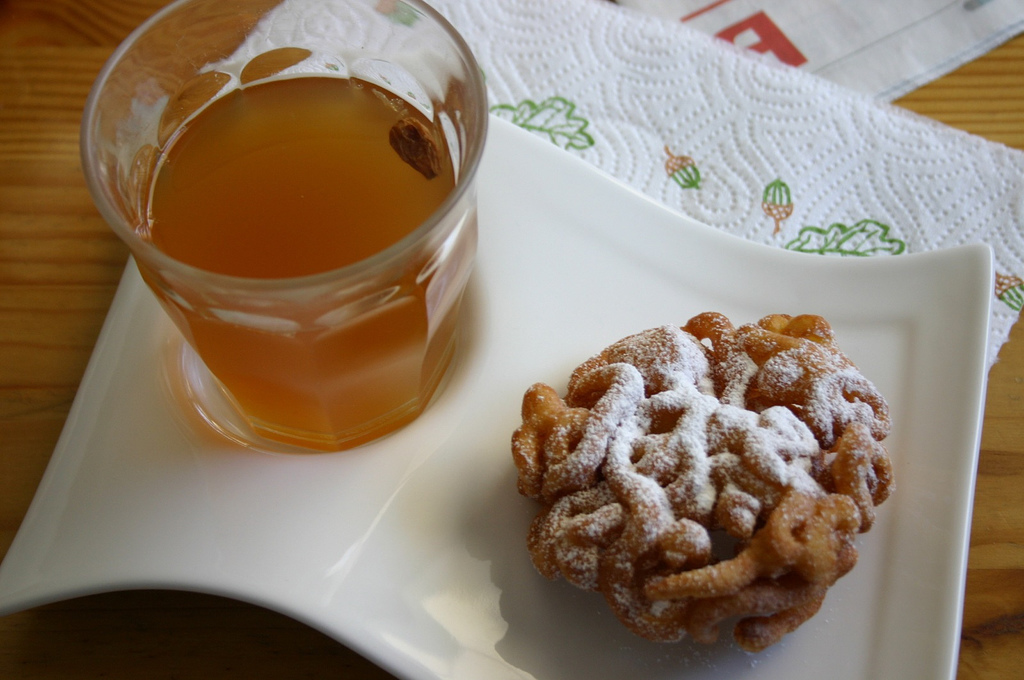
The typical specialities of Vappu are' tippaleipä', a kind of fritter, served with a type of mead, 'sima'. Another tasty speciality is 'munkki', a kind of doughnut. _Els productes tradicionals que es prenen aquests dies són la sima, una beguda no alcohòlica tipus aiguamel que es serveix ben freda, i tippaleipä...
A usually calm and reserved country fills with people dressing up as different creatures, with drinks in their hands, sharing them with everyone. And the party lasts until the early hours of the morning!_Aquí... manifestacions... manifestacions... manifestacions... i tal i com estan les coses... amb males cares i molt mal humor. Ja heu vist com s'ho passen d'allò més bé... allà... a Finlàndia... amb un clima tan fred...
If summer is short in Finland, spring is even shorter. It begins while temperatures barely reach 0º in southern Finland, where there is often snow on the ground, although people are already preparing for summer activities. In Lapland you can still ski well under a sun that shyly begins to heat up. It could happen that depending on the meteorological year and which part of Finland you are visiting, maybe there's no spring, and you'll be certainly lucky if then there's some summer time._Si l'estiu és curt a Finlàndia, la primavera ho és encara més. Sempre i quan n'hi hagi, perquè pot passar que, depenent de l'any metereològic, saltem, si hi ha sort, directament a l'estiu. Al sud de Finlàndia la primavera arriba quan encara les temperatures diürnes potser no han arribat ni als 0 graus i sovint encara hi ha neu a terra a principis d'abril, tot i que la gent ja es prepara per a les activitats d'estiu. Al nord, encara es pot esquiar perfectament sota un sol que, tímidament, ja comença a escalfar.
But what does not go unnoticedto anyone is that daylight hours lengthen rapidly culminating in late June, in Midsummer. When temperatures starts to rise and the days get longer and longer Finns want to celebrate the new season and the promise of those long-awaited summer days. _ El que si és evident és que les hores de sol s'allarguen ràpidament fins a culminar a finals de juny, a Juhannus. Quan la temperatura comença a pujar i els dies es fan més i més llargs, els finlandesos celebren la nova temporada i la promesa d'aquests dies d'estiutanesperats.
Finland stays, for the second consecutive year, as the happiest country in the world, according to a United Nations Report published coinciding with the World Happiness Day celebrated at the beginning of spring season. Spain ranks number 30 in the ranking (last year was placed in 36th position)._Finlàndia es manté, per segon any consecutiu, com el país més feliç del món, segons un informe de Nacions Unides publicat coincidint amb el Dia Mundial de la Felicitat que se celebra amb l'inici de la primavera. Espanya ocupa en el rànquing el trenté lloc, sis llocs per damunt del lloc de l'any passat.
According to the report, drawn up on the basis of three years of surveys on how happy citizens feel, it has revealed that the Nordic neighbors Denmark, Norway and Iceland closely follow Finland in the classification. The ranking of the 10 happiest countries is completed with Holland, Switzerland, Sweden, New Zealand, Canada and Austria. The United States holds the19th place, Russia 68th, China 93th and India 140th._Segons
l'informe, elaborat sobre la base de tres anys d'enquestes sobre com se
senten els ciutadans feliços, ha revelat que els veïns nòrdics Dinamarca, Noruega i Islàndia seguixen
de prop a Finlàndia en la classificació. El rànquing dels 10 països més
feliços es completa amb Holanda, Suïssa, Suècia, Nova Zelanda, el
Canadà i Àustria. Els Estats Units ocupa el lloc 19, Rússia el 68, la
Xina el 93 i l'Índia el 140.
Spain has received a score of 6,354 out of 10. Other European countries such as Germany, Luxembourg, United Kingdom, Ireland, Belgium, Malta or France are positioned before Spain.The
items used for the evaluation include the gross internal product (GDP)
per capita, the years of healthy life expectancy and corruption
perceived in the government and companies. This year's report focused on
"happiness and the community", considering factors such as social media
and technology, social norms, conflicts and government policies._Per davant d'Espanya, que ha rebut una puntuació de 6,354 sobre 10, es troben altres països europeus com Alemanya, Luxemburg, Regne Unit, Irlanda, Bèlgica, Malta o França.Els
factors utilitzats per a l'avaluació inclouen el producte intern brut
(PIB) per càpita, els anys d'esperança de vida saludable i corrupció
percebuda en el govern i les empreses. L'informe d'enguany es va centrar
especialment en la "felicitat i la comunitat", considerant factors com a
els mitjans socials i la tecnologia, les normes socials, els conflictes
i les polítiques governamentals.
Today, February 28, is Kalevala Day in Finland, or Finnish Culture Day. _Avui, 28 de febrer, és el Dia del Kalevala a Finlàndia, o Dia de la Cultura Finlandesa.
On February 28, 1835, after years of research, Lönnrot signed the preface to the first edition of The Kalevala, the Finnish national epic. The version most commonly known today was first published in 1849._El 28 de febrer de 1835 Elias Lönnrot, el recopilador del Kalevala, l'epopeia nacional de Finlàndia, va firmar el pròleg de la primera versió d'aquest poema, tot i que la versió més coneguda és la segona de 1849.
It is regarded as the national epic of Karelia and Finland and is one of the most significant works of Finnish literature. The Kalevala played an instrumental role in the development of the Finnish national identity, the intensification of Finland's language strife and the growing sense of nationality that ultimately led to Finland's independence from Russia in 1917. Lönnrot and his assistants traveled throughout the country, asking people to tell them whatever they could remember about the folklore surrounding Kalevala, the 'Land of Heroes'._L'aparició d'aquesta obra va ser molt important perquè suposava el redescobriment de la cultura del poble de Finlàndia pels mateixos finlandesos. El Kalevala és una epopeia tradicional basada en la poesia oral transmesa de generació en generació, i recuperada per Lönnrot en els seus viatges pels pobles d'aquest país.
Akseli Gallen-Kallela. La Defensa del Sampo, 1896 Foto Museu de Belles Arts de Turku
The Kalevala is thus the basis of the Finnish native culture. It has inspired, and keep on doing so, a multitude of artists. The celebration of February 28 as the Day of the Finnish Culture began in the early '60s of the nineteenth century by a group of students. In 1920 flags began to wave around to celebrate it, and from 1978 it is an official Day._El Kalevala és, doncs, la base de la cultura autòctona finlandesa. Ha inspirat, i segueix fent-ho, a multitud d'artistes. A més, la celebració del 28 de febrer com a Dia de la Cultura ja va veure els inicis a la dècada dels anys '60 del segle XIX per un grup d'estudiants. Cap a 1920 les banderes onejaven per a celebrar-ho, i a partir de 1978 es va oficialitzar aquest costum.
Ja arriben els Reis Mags d'Orient! Ja són aquí! Seguint l'estrella d'orient, arribaran a tots els pobles i ciutats de la nostra terra per a dur-nos regals a tots! A tots aquells que ens hem portat més o menys bé durant l'any, és clar! Quins nervis! Ara ja són... molt a prop... justament per aquí...
The Cavalcade of Magi is a traditional parade of kings coaches, practically in all Spanish cities and also in some cities and towns in Mexico. TheMagi (of which tradition holds there were three: Melchior, Gaspar, and Baltasar) ride through the streets, as their page boys throw candies to children. It is celebrated every January 5 (the day preceding the feast of Epiphany) in the evening. When the night comes the children must go to bed early after cleaning their shoes and the following morning they have the gifts of the Magi that they have requested before in a letter. According to this tradition, the children who have behaved badly during the last year receive coal rather than candy, though (as in the case of Santa Claus) this is not a frequent occurrence. They might get coal candy, though.
The cavalcade of Alcoy is the oldest in the world and is a major draw of international tourism for Spain.
In Poland the first Cavalcade took place in 2009.
Barcelona
Però... i a Finlàndia? Celebren els Reis a Finlàndia?
Finlàndia no celebra el dia de Reis com ho fem aquí... amb cavalcades, i regals... però sí que hi ha alguna cosa relacionada amb els Reis Mags... Tiernapojat. Sembla ser que es tracta d'una tradició que, a Finlàndia (perquè celebracions similars es troben per tot el nord d'Europa) podria haver nascut a la ciutat d'Oulu. Els estudiants, que després de les festes ja anaven escassos de diners, es disfressaven i representaven una obra d'origens medievals. Ho feien mentre anaven de casa en casa, formant una espècies de cavalcada. Després de cada representació es demanava una donació al públic. I és la història dels Reis Mags i la seva trobada amb el rei Herodes i el nen Jesús la que representen. També s'hi inclouen algunes cançons de Nadal i una cançó de lloança al Tsar Alexandre.
Els personatges de l'obra són Herodes, el Rei dels Moros (que duu la cara pintada de negre), Knihti i Mänkki. Tots execepte Mänkki, que es el portador de l'estrella (i de les notícies del naixament de Jesús), duen espases.
En l'obra, que s'explica amb el dialecte arcaic d'Oulu, hi veiem la trobada entre Herodes i el Rei dels Moros, i la conversa sobre els tres Reis Mags, així com l'ordre d'Herodes de matar a tots els nens acabats de néixer de la ciutat.
Aquí us deixem amb una versió més... rockera... de l'obra... molt adecuada als gustos musicals de Finlàndia.
The Star boys' singing procession (Tiernapojat), also known as "Epiphany singers", has children and young people walking about with a movable star on a rod and often wearing crowns and dressed in clothes to resemble the Three Magi (variously also known as Three Kings, Three Wise Man). The singing procession and the folk drama had its roots in an old medieval ecclesiastical play, centred on the Biblical Magi of the Christmas story in the Gospel of Matthew (Mt 2,1-28), appropriate to Epiphany. The liturgical drama developed from the 16th century on, as it was performed by cathedral schoolboys, to become a more secular mystery drama, containing also some ordinary Christmas songs and carols. The singing procession and play was usually observed each year during the period between 27 December and 6 January (the feast of the Epiphany). In Finland, a version of the Star boys' procession originating in the city of Oulu, a musical play known as Tiernapojat, has become established as a cherished Christmas tradition nationwide. The Tiernapojat show is a staple of Christmas festivities in schools, kindergartens, and elsewhere, and it is broadcast every Christmas on radio and television. The Finnish version contains non-biblical elements such as king Herod vanquishing the "king of the Moors", and a short song of praise to Tsar Alexander.
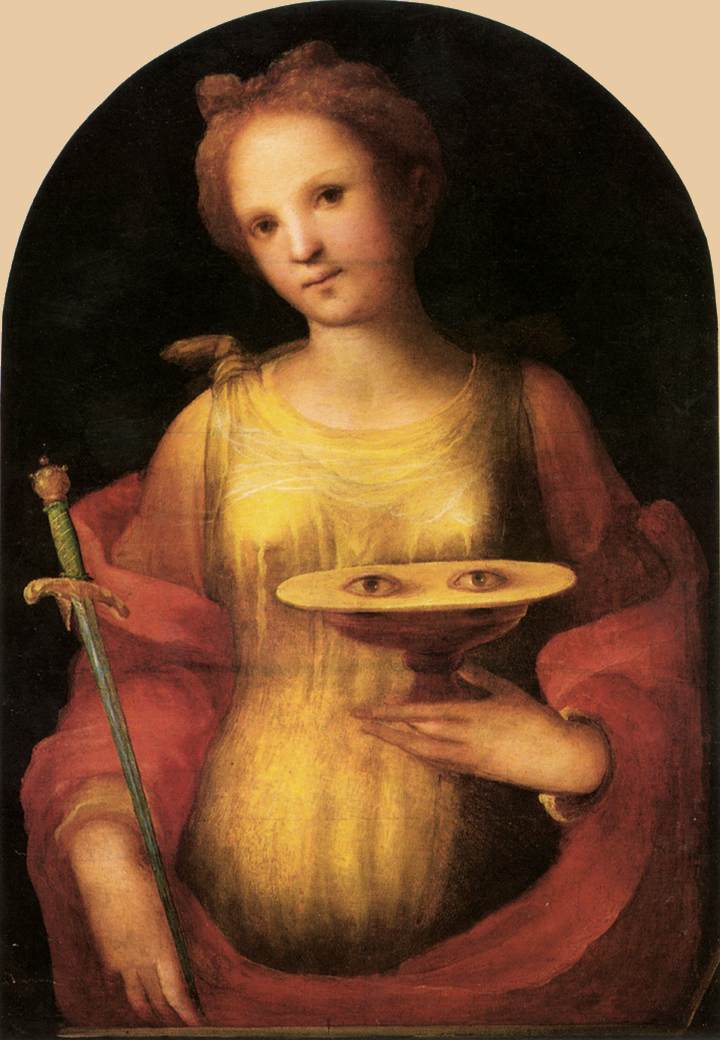
Yestarday was 'LucianPäivä', the Feast of Saint Lucy._Ahir va ser Lucian Päivä, Santa Llúcia a casa nostra.
SaintLucia is one of the few saints celebrated by the overwhelminglyLutheranNordic people—Danes;Swedes;FinnsandNorwegians._Tot i que Finlàndia és un país eminentment luterà, la festivitat de Santa Llúcia és una de les poques que van quedar després de la Reforma de 1530.
It is aday whentheolder womanin the familywalks witha crownof sevencandles,leadinga processionof otherwomen whoholda candleeach.The woman who wears the crown,enters the roomsinging the song'SantaLucia'(an old Neapolitan song), the lyrics ofwhichhas adapted to theScandinaviantraditionsand describeslightovercomingdarkness._És un dia en que la dona més gran de la família camina amb una corona de set espelmes, encapçalant una processó d'altres dones que aguanten una espelma cada una. La dona que duu la corona, entra a la sala cantant la cançó de Santa Llúcia (una antiga cançó napolitana), la lletra de la qual s'ha adaptat a les tradiciones escandinaves i descriu la llum amb què Santa Llúcia venç la foscor.
The Finnish celebrations have been historically tied to Swedish culture and the Swedish-speaking Finns. St Lucy is celebrated as a “beacon of brightness” in the darkest time of year. The
first records of St. Lucy celebrations in Finland are from 1898, and
the first large celebrations came in 1930, a couple of years after the
popularization of the celebrations in Sweden. The St. Lucy of Finland
has been elected since 1949 and she is crowned in the Helsinki Cathedral. Anna-Kajsa Edström has been this year's elected girl._És una festa celebrada, sobretot, pels suecs i, a Finlàndia, sobretot pels finlandesos d'origen suec. A Hèlsinki, la coronació de Llúcia, és duu a terme a la Catedral d'Hèlsinki. Aquest any (2018) ha estat Elin Qvist.
After thecoronation, singing'SantaLucia' processionbeginsat thecity center._Després de la coronació, amb el cant de Santa Llúcia, s'inicia una processó pel centre de la ciutat.
The St. Lucy's Day celebrations retain many indigenousGermanicpagan, pre-Christianmidwinterelements. Some of the practices associated with the day predate the adoption ofChristianityin
Scandinavia, and like much of Scandinavian folklore and even
religiosity, is centered on the annual struggle between light and
darkness. It
is likely that tradition owes its popularity in the Nordic countries to
the extreme change in daylight hours between the seasons in this
region._El per què va sobreviure aquesta festivitat ve molt lligat a la relació que tenen els països nòrdics amb la llum i la foscor, sobretot durant els mesos més crus de l'any, novembre i desembre, on el dia té molt poques hores. El dia 13, el dia de Santa Llúcia, marca el punt d'inflexió, essent la nit més llarga de l'any, i l'endemà, el dia (llum) ja comença a guanyar terreny a la nit (foscor).
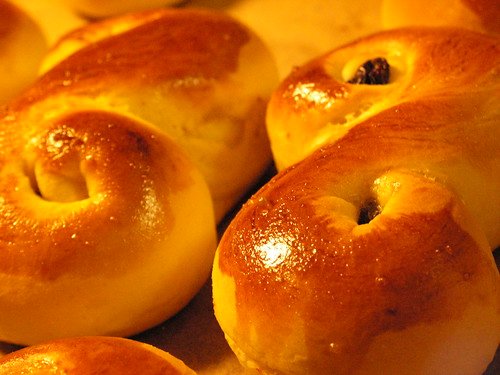
Com sempre, a Finlàndia, hi ha una menja especial per a l'ocasió ... en aquest cas, d'origen suec... Lussekatt (panets de canyella) src big in finland
OnDecember 13is the dateof themartyrdom ofSt. Luciaandin theoriginalJulian calendarcoincided withthe winter solstice(I found this process of Christianisation pagan traditions specially interesting...at leastthose relatedto Christmas)._El dia 13 de desembre és la data suposada del martiri de Santa Llúcia i que, en el calendari julià original coincidia amb el solstici d'hivern (és molt interessant tot aquest procés de cristianització de les tradicions diguem-ne... paganes... sobretot les que estan relacionades amb el Nadal). It
is also the traditional start date of the holiday season. This day
should start the Fira of Santa Llúcia (which lasts until the 24th) in
Barcelona. _És també la data tradicional d'inici de les festes nadalenques. Aquest dia hauria de començar la Fira de Santa Llúcia (que dura fins el 24)... En Aquest dia s'haurien d'encendre els llums als carrers... Aquest dia s'ha de muntar el pessebre i engalanar la casa... Aquest dia... ja que fins a aquest dia no s'haurien venut les figures, els avets, les altres ornamentacions nadalenques...
The oldest date from the Barcelona Fira de Santa Llúcia is 1786._La data més antiga de la Fira de Santa Llúcia de Barcelona és la de 1786. I així ho corrobora Joan Amades (més inormació al web Fira de Santa Llúcia). La seva instal·lació també ha variat molt. Però, sens dubte, és una de les tradicions nadalenques més arrelada i antiga de Barcelona. Josep Mª de Segarra, en el Romanç de Santa Llúcia deia...